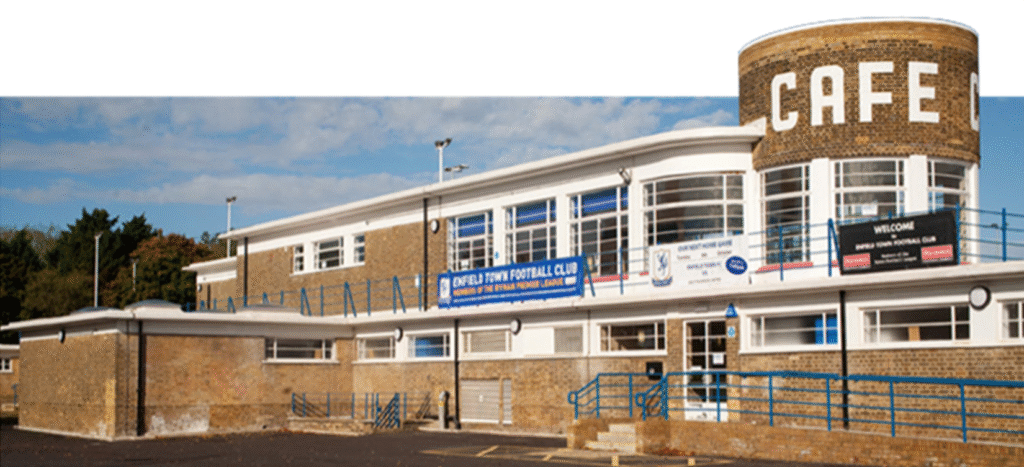
Supporting Matthew Montague Architects, Heatons acted as the planning and heritage consultant to assist in successfully securing planning permission for the redevelopment of the Grade II Listed Queen Elizabeth II Stadium, the proud home of Enfield Town Football Club.
Following the club’s impressive promotion to the National League South, a significant milestone in its journey, the proposed redevelopment aimed to modernise and expand the stadium’s infrastructure. The application sought to address the immediate and long-term needs of the club by incorporating several crucial elements into the design. These included the erection of a new grandstand, the installation of modern turnstiles, the relocation of the existing stand, and the addition of other essential facilities. All these efforts were designed to increase the stadium’s capacity, improve spectator experience, and ensure the venue met the rigorous standards set by the Football Association.
Of particular importance was the proposed 20% increase in seating capacity, a critical step to accommodate the growing fanbase, particularly as the club ascended to a higher level of competition. The development also included the creation of new, dedicated facilities for away fans, including away-specific turnstiles and an entry point. This thoughtful approach not only aligns with regulatory standards but enhances the matchday experience for both home and away supporters, ensuring safety, comfort, and convenience.
The Queen Elizabeth II Stadium’s Grade II Listing underscores its significant historical and cultural value. As a celebrated local landmark, the stadium features an iconic art-deco pavilion, renowned for its architectural merit. The challenges of preserving the building’s heritage while implementing modern improvements required careful planning and sensitive design. Heatons, with its deep understanding of both planning regulations and heritage considerations, took a nuanced approach to the project. We provided comprehensive planning and heritage statements, ensuring that the stadium’s historical character would be respected and safeguarded while still enabling necessary upgrades. Furthermore, Heatons offered invaluable strategic advice throughout the process, helping to navigate the complexities of the application and ensuring that all aspects of the project complied with planning laws and heritage protection requirements.
The planning application was submitted and, thanks to this meticulous work, was approved within just six weeks, an impressive turnaround that reflects Heatons’ expertise and the robustness of the proposal. The swift approval highlights the careful balance between preserving a historic structure and enhancing its functionality for modern-day use.
The planned improvements demonstrate Enfield Town FC’s commitment to not only growing the club but also enriching the experience of its supporters and integrating the club further into the local community. With the redevelopment of the Queen Elizabeth II Stadium, Enfield Town FC can continue to thrive and compete at a higher level while maintaining a strong connection to its roots. The project represents a pivotal step in ensuring the club’s future success and sustainability.
This case further highlights Heatons’ expertise in sports-related development projects, particularly their skill in supporting local clubs at lower levels of competition. By meeting the specific needs of football associations and their stringent regulations, Heatons played a vital role in helping clubs like Enfield Town FC navigate the complex landscape of stadium development, making it possible for these clubs to grow both on and off the pitch.